How Contractors Win Jobs Without Cutting Their Own Margin to Get There
Ask most contractors why they lost a bid, and the answer is usually "someone quoted lower." Ask why they won one, and often it's the same reason: they went lower too. Price has become the easiest lever to pull, and the most dangerous one, because a lower price only wins the job. It doesn't guarantee the job is worth taking.
This article looks at why contractors end up cutting margin, what changes when your estimate is accurate from the start, and how to handle a client who wants a lower number.
The real problem isn't losing jobs. It's winning the wrong ones.
A quote built on a rough estimate, rounded down under pressure to be competitive, can look like a win the day it's signed and a loss by the time the project closes.
The usual culprits:
- Underpriced materials.
- An underestimated labour scope.
- A margin that quietly disappeared once real costs came in.
These are the reasons a "successful" contractor can still end a year without much to show for it. As many Malaysian contractors put it: kerja siap, tapi untung tak ada. The work gets done, but the profit isn't there.
Why do contractors cut their price to win a bid?
Without a proper cost breakdown, a contractor negotiating with a price-sensitive client has very little to stand on beyond instinct.
If a client pushes back on the number, the honest answer is: "this is what it actually costs, and here's my margin on top." But that answer is hard to give when the original quote wasn't built from real quantities and rates in the first place. So the price gets cut instead, because cutting a number is easier than defending one you're not fully sure of.
Homeowners notice this too. When quotes for the same job vary widely and none of them show their workings, clients have no way to compare except the bottom line, which pushes everyone towards the lowest figure.
What changes when the estimate is accurate from the start?
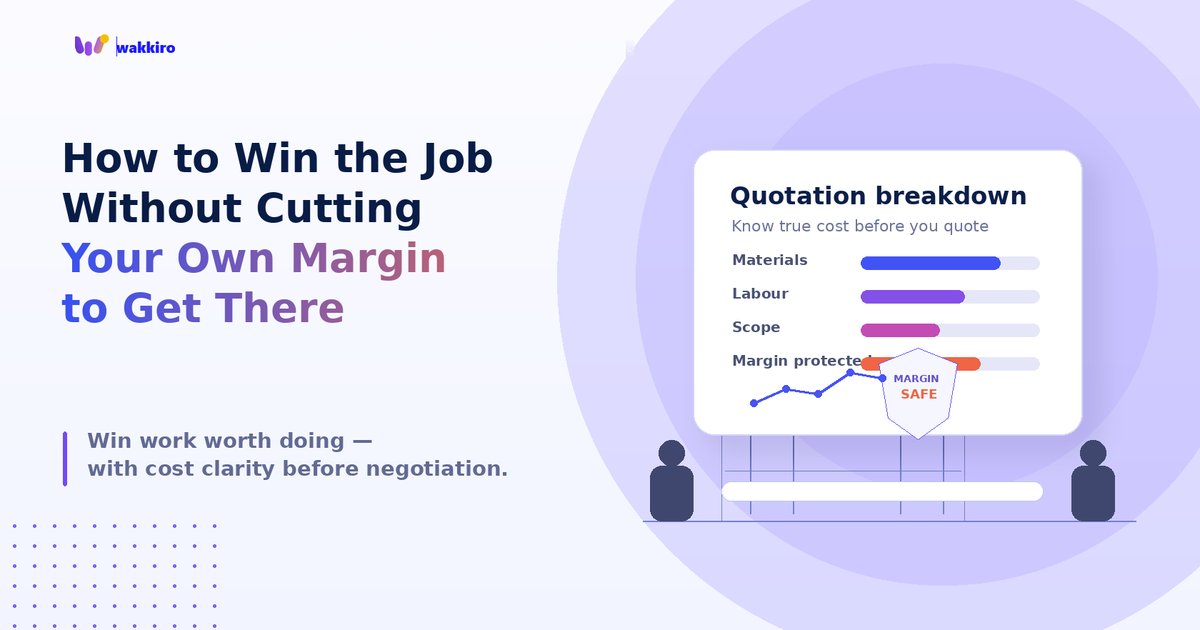
When a quotation is built from real quantities, current material and labour rates, and a clearly stated margin, the conversation with a client shifts. Instead of negotiating a single number up or down, you're able to show exactly what's driving the cost, and where there's genuine room to adjust versus where there isn't.
An itemised quotation also makes you easier to trust. A client who can follow each line, the way we describe in how to read a BOQ, is comparing your work, not just your total.
Upload a drawing or describe the job — Wakkiro builds an itemised BOQ at current Malaysian rates, free.
Estimate My Project →How Wakkiro fits into the process
This is where Wakkiro fits directly. Every estimate generated shows the full breakdown by trade, with itemised quantities and rates priced against current Malaysian market data, so a contractor knows precisely what a project actually costs before a single number is quoted to a client.
On top of that, margin can be set and adjusted transparently, so you always know what percentage of profit sits on top of true cost, rather than estimating it by feel under pressure to close the deal. If you want to see the breakdown for yourself, you can run an estimate here.
How to handle a client who asks for a lower price
Knowing your numbers changes what happens at the negotiating table:
- Negotiate on scope, not margin. A client asking for a lower price can be shown, item by item, what a lower price would actually mean: a lower spec, less finishing, fewer inclusions. You no longer simply absorb the difference out of your margin.
- No guessing about room to move. A contractor confident in the cost breakdown doesn't need to guess how much room there is to move. The number is known, not estimated.
- Compete on value. Competing against a lower quote becomes a conversation about value and inclusion, not a race to see who can absorb the biggest loss.
The result: winning work worth doing
Winning a job at a price that still protects margin isn't about being a tougher negotiator. It's about knowing your actual numbers well enough that you're never negotiating from uncertainty.
That's the difference between winning work, and winning work worth doing. If you're still choosing how to build your estimates, see our checklist on estimating software for small contractors.
Frequently Asked Questions
How can a contractor win a job without lowering the price?
Build the quotation from real quantities, current material and labour rates and a clearly stated margin. That lets you show the client what drives the cost and negotiate on scope and value instead of cutting profit.
Why do contractors lose money on jobs they win?
Usually because the quote was built on a rough estimate and rounded down to be competitive. Underpriced materials, underestimated labour or a margin that disappears once real costs arrive turn a signed job into a loss.
What should I do when a client says another contractor quoted lower?
Show them item by item what a lower price would mean, such as a lower spec, less finishing or fewer inclusions. This turns the discussion into a comparison of value rather than a race to absorb the biggest loss.
Should a contractor show their margin to the client?
Being able to say "this is what it actually costs, and here's my margin on top" makes a price easier to defend. At minimum, you should always know exactly what percentage of profit sits on top of true cost.
Does an itemised quotation help win jobs?
Yes. An itemised quotation shows where the money goes, makes your price easier to trust, and lets the client compare what is actually included rather than just the bottom line.
Line-by-line BOQ for a new build, extension or renovation — in minutes.
Start Now →