Construction Cost Malaysia 2027: Forecast Cost per sq ft by Building Type, State and Scenario
Baca panduan ini dalam Bahasa Malaysia →
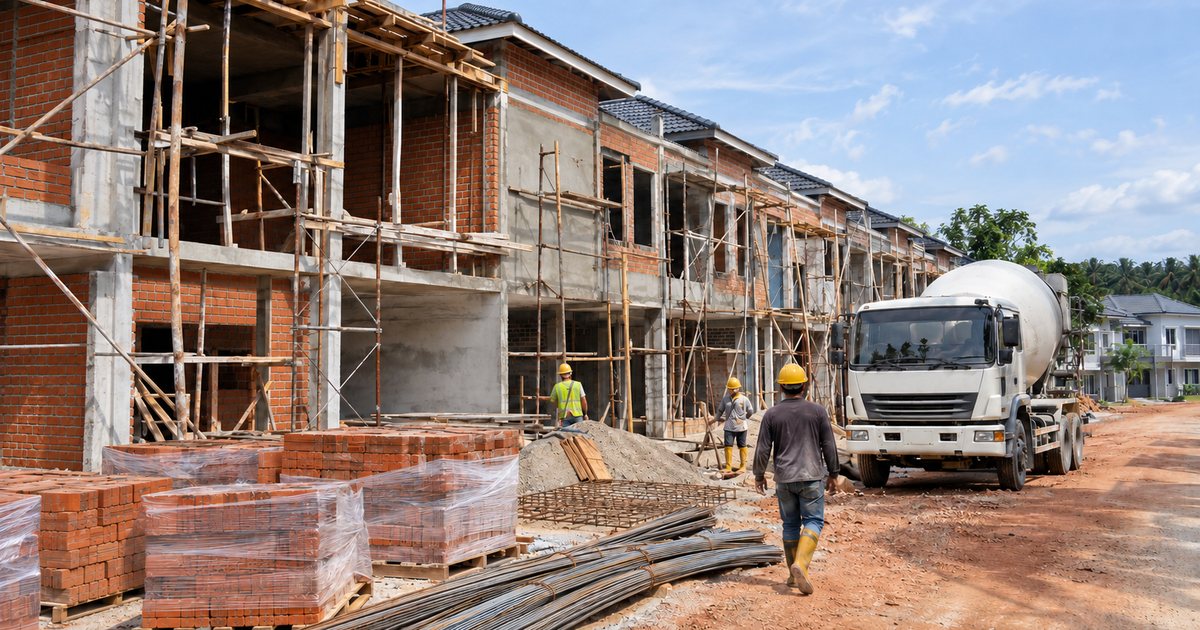
Wakkiro estimate for 2027: building a house in Malaysia should cost about RM186–RM238 per sq ft for basic spec, RM259–RM341 for standard and RM362–RM466 for premium. That is about 3.4% above our 2026 benchmark. Our low and high scenarios are +1.3% and +6.2%. Renovation rises a little faster, about 3.8%, because it is more labour-heavy.
This handbook-style guide gives 2027 psf ranges by building type and state, the inputs behind the forecast (DOSM's October 2026 building cost index, wage data and the Budget 2027 minimum wage), a worked example on a RM264,000 house, and what to do about timing, price locks and contingency.
Building cost per sq ft Malaysia 2027: the forecast table
These are our estimates for a complete house on your own land, contractor's profit included, land and consultants excluded. The 2026 column is our published benchmark from the guide to the cost to build a house in Malaysia. The 2027 columns apply the cost model explained further down.
| Specification | 2026 (RM psf) | 2027 low (+1.3%) | 2027 base (+3.4%) | 2027 high (+6.2%) |
|---|---|---|---|---|
| Basic: simple finishes, metal deck roof | RM180–RM230 | RM182–RM233 | RM186–RM238 | RM191–RM244 |
| Standard: porcelain tiles, concrete roof tiles | RM250–RM330 | RM253–RM334 | RM259–RM341 | RM265–RM350 |
| Premium: imported finishes, high ceilings | RM350–RM450+ | RM355–RM456 | RM362–RM466 | RM372–RM478 |
In RM per m², the standard base band is RM2,788–RM3,671 (psf × 10.764). The spread between low and high is only about 5 points. What moves you most within a year is still specification and soil, not the calendar.
2026 vs 2027 cost by building type
Renovation and extension work carry more labour, so they rise slightly faster than new builds in our model (+3.8% and +3.5% base). The two real projects below were priced by our site engineer in 2026; the 2027 figures are those prices × 1.0345, rounded to the nearest RM1,000.
| Building type | 2026 | 2027 base |
|---|---|---|
| Single-storey house, standard spec, 1,075 sq ft (real project) | RM295,000 (RM274 psf) | about RM305,000 (RM284 psf) |
| Double-storey premium bungalow, Johor, 4,262 sq ft (real project) | RM1,100,000 (RM258 psf gross, RM427 per enclosed sq ft) | about RM1,138,000 |
| Renovation, light refresh (terrace) | RM20,000–RM50,000 | RM20,800–RM51,900 |
| Renovation, mid scope | RM60,000–RM120,000 | RM62,300–RM124,500 |
| Renovation, major | RM120,000–RM250,000 | RM124,500–RM259,400 |
| Ground-floor rear extension (A&A) | RM150–RM220 psf | RM155–RM228 psf |
| Side or front extension | RM130–RM200 psf | RM135–RM207 psf |
| Upper-floor extension | RM220–RM320 psf | RM228–RM331 psf |
Terrace and semi-D new builds: we have no engineer-priced terrace or semi-D in our project set, so we do not publish a separate band. Use the spec bands above. An intermediate terrace usually lands in the lower half of its band because it shares both side walls. On a 40 × 50 ft two-storey footprint, a bungalow has about 54.9 m of external wall against roughly 13.4 m for an intermediate terrace. Render and weatherproof paint alone cost about RM42 per m² in our rates. A semi-D sits between the two. Bungalows have their own pitfalls, covered in our guide to the cost to build a bungalow in Malaysia.
Construction cost in KL, Selangor and Johor for 2027
DOSM's material index is rising faster in Johor (+3.3% y/y in October 2026) than in the Selangor/KL/Melaka/Negeri Sembilan region (+1.7%). So we apply each region's own trend instead of one national figure. That gives +3.0% for KL and Selangor and +3.9% for Johor (base case).
| State | Basic 2027 | Standard 2027 | Premium 2027 |
|---|---|---|---|
| Kuala Lumpur | RM196–RM252 | RM273–RM361 | RM386–RM494 |
| Selangor | RM185–RM237 | RM258–RM340 | RM361–RM464 |
| Johor | RM177–RM229 | RM249–RM327 | RM348–RM447 |
Johor still comes out cheaper than Selangor, but the gap narrows. For the other states, start from the 2026 table in house building cost by state and add about 3.4%.
How we built the 2027 forecast
We did not take a consultant's headline number and apply it to houses. We split our 2026 cost into three parts, then applied a sourced change to each part.
- Shares (new build): materials 55%, labour 37%, other 8%. The 8% is prelims, insurance, statutory fees, plant and transport (RM20,000 of our RM264,000 reference house). The rest is split about 60:40 materials to labour.
- Materials: DOSM's Building Cost Index for reinforced-concrete houses rose 1.60% and 1.79% y/y in Selangor/KL (single-storey and 2–4 storey) and 3.27% and 3.34% in Johor, October 2026 vs October 2025. Their average is 2.5%, our base. Low 0.5% is Selangor/KL's three-year trend. High 5.0% assumes a repeat of 2026's energy shock, when Johor's index rose 4.1% in four months.
- Labour: the DOSM wage survey shows mean construction pay rose from RM3,035 (2024) to RM3,188 (2025), +5.0%. That is our base. Low is 2.5%. High is 8%, adding the minimum wage step explained below.
- Other: 1.8% low and 2.8% base, the Finance Ministry's 2027 inflation range. High is 6%, if diesel spikes again.
| Scenario | Materials (55%) | Labour (37%) | Other (8%) | Total change |
|---|---|---|---|---|
| Low | +0.5% → 0.275 | +2.5% → 0.925 | +1.8% → 0.144 | +1.34% |
| Base | +2.5% → 1.375 | +5.0% → 1.850 | +2.8% → 0.224 | +3.45% |
| High | +5.0% → 2.750 | +8.0% → 2.960 | +6.0% → 0.480 | +6.19% |
For renovation we use 42% materials, 50% labour and 8% other, because hacking and making-good are slow. That gives +1.6% / +3.8% / +6.6%. Extensions (51/41/8) come out at +1.4% / +3.5% / +6.3%.
Worked example: the RM264,000 house in 2027
Our 2026 reference is a 1,000 sq ft single-storey house, standard spec, in Selangor: RM264,000 including prelims and statutory contributions. Split it first: materials 264,000 × 55% = RM145,200; labour × 37% = RM97,680; other × 8% = RM21,120. Those three add back to RM264,000.
| Scenario | Materials | Labour | Other | Increase | 2027 total |
|---|---|---|---|---|---|
| Low | 145,200 × 0.5% = RM726.00 | 97,680 × 2.5% = RM2,442.00 | 21,120 × 1.8% = RM380.16 | RM3,548.16 | RM267,548 |
| Base | 145,200 × 2.5% = RM3,630.00 | 97,680 × 5.0% = RM4,884.00 | 21,120 × 2.8% = RM591.36 | RM9,105.36 | RM273,105 |
| High | 145,200 × 5.0% = RM7,260.00 | 97,680 × 8.0% = RM7,814.40 | 21,120 × 6.0% = RM1,267.20 | RM16,341.60 | RM280,342 |
So the same house costs about RM9,100 more in our base case, a range of RM3,500 to RM16,300. Labour contributes more of the increase than materials, even though materials are the bigger share.
Market outlook: what published sources say
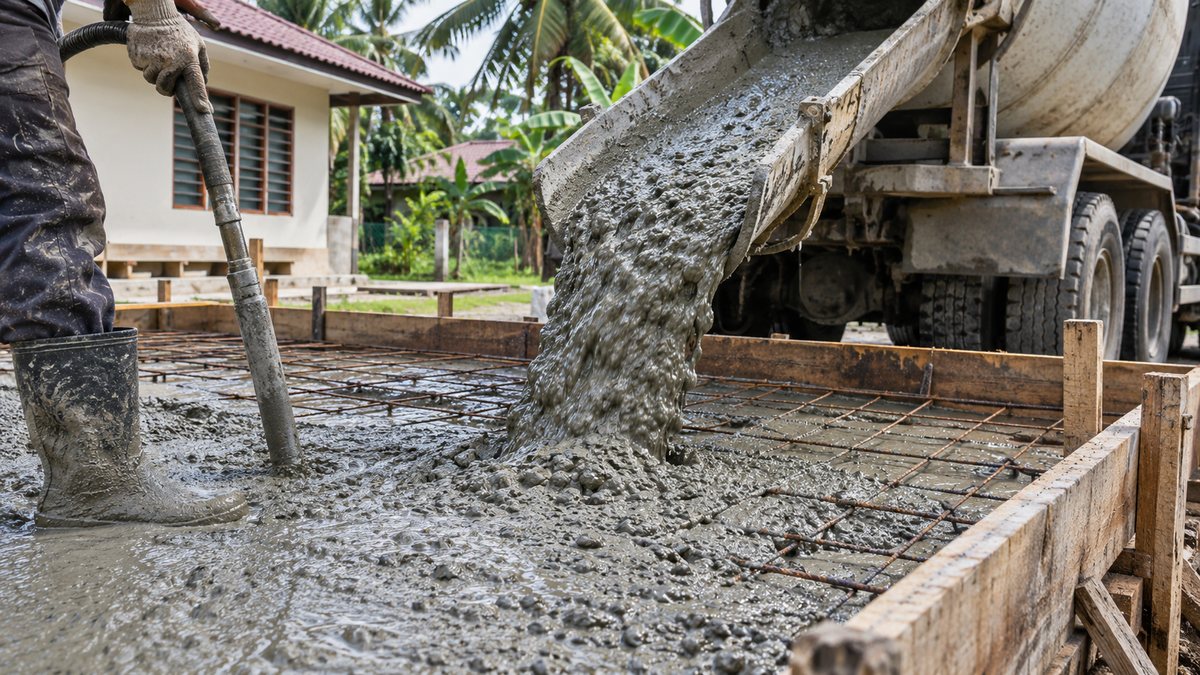
- DOSM, October 2026: OPC cement averaged RM25.80 per 50kg bag, unchanged. Steel bar fell 3% in the month to RM3,327.30 per tonne. Year on year, ready-mix concrete rose 12–13% and aggregates 12–18%. Sand rose 7% in Selangor/KL and 18% in Johor. Floor tiles, roofing and sanitary fittings were roughly flat.
- Ministry of Finance, Economic Outlook 2027: inflation of 1.8–2.8% in 2027, "firmer in the early months" before easing. Construction is forecast to grow 5.7%, led by data centres in Selangor, Johor and Negeri Sembilan.
- Bank Negara, 5 November 2026: OPR held at 2.75%. The bank noted that inflation had edged up on energy costs.
- REHDA survey, July–August 2026: building construction costs up 3–5%. Earthworks and infrastructure were up over 20%, mostly from bitumen.
- Contractor and analyst claims: CIMB's channel checks put costs up 5–15% since the US–Iran war began in late February 2026. PKPM, a contractors' association, said 10–15% in May 2026.
- Rider Levett Bucknall: expects Kuala Lumpur tender price escalation to moderate compared with the year before.
Why the gap between 3% and 15%? The higher claims cover the whole of a contractor's cost since February, including diesel, lorries, plant and infrastructure work. DOSM's house index tracks building materials only. Unsubsidised diesel has also fallen, from RM5.52 a litre at the end of March to RM4.47 for 26 November–2 December 2026.
Tender price index Malaysia 2027
CIDB publishes a tender price index, and quantity surveying consultants publish their own tender price forecasts and cost handbooks. We could not verify a 2027 figure for Malaysia from any of them, so we do not quote one. Our +3.4% base is a cost forecast built bottom-up for houses. It is not a tender price index. Tender prices can move differently, because contractors with full order books add margin. That is a real risk in 2027, as data centre and rail jobs compete for MEP trades and ready-mix.
Cost drivers to watch in 2027
- Diesel: it drives ready-mix, sand, aggregates and every lorry trip. A move back above RM5 a litre points to the high case.
- Minimum wage: Budget 2027, tabled on 9 October 2026, raises it from RM1,700 to RM2,000 from June 2027. That is +17.6%, or about +10.3% averaged over 2027. SMEs with sales below RM50 million are exempt, and most house builders are SMEs. Our high case passes part of the rise through to assistants and general workers.
- Foreign worker levy: the Peninsular construction levy is RM1,850 a year. The planned multi-tier levy had no gazetted date as at November 2026, and Budget 2027 announced no change. Employer EPF of 2% for foreign workers started in October 2025 and is already in our 2026 rates.
- Steel: falling. Steel bar dropped 3% in October and is down year on year in most regions. That helps the structural frame, the biggest single package in a house.
- Service tax: construction services carry 6% service tax from July 2025, but residential buildings are exempt. Work on completed homes was also exempted, backdated to July 2025. Check that a renovation quote does not add 6% for this.
The other Budget 2027 measures for home buyers and builders are covered in what Budget 2027 means for house costs.
What a psf figure includes, and what it leaves out
- Included: groundworks and standard foundations, RC frame, brickwork and plaster, roof, doors and windows, tiles and paint, wiring, plumbing and sanitary ware, prelims, insurance, CIDB levy.
- Not included: land, consultant fees (3–8% of construction), long piling on soft soil (RM15,000–RM40,000 extra), kitchen cabinets and wardrobes, air-cond units, fencing and landscaping beyond basics, TNB and water deposits (RM3,000–RM8,000).
How to check a contractor's quote in 2027
- Divide the total by the built-up area and compare it with the 2027 band for your spec and state. Ask which area they used. Enclosed area and gross area with porches can differ by a third.
- Ask for a BOQ, not a lump sum. Look at the concrete, sand and aggregate lines, where 2026 increases landed. Our guide on how to read a BOQ shows what each line should contain.
- Check the validity period and any price fluctuation clause. A clause limited to steel and ready-mix, tied to the DOSM index, is fair. An open "subject to market price" clause is not.
- Check that no 6% service tax has been added on residential work.
- Ask about the labour mix (local or foreign) and whether the quote allows for the June 2027 wage change.
What this means for you
- Lock prices on a fixed lump sum with a BOQ. Waiting is unlikely to save money. Our low case is still +1.3%, while the high case adds about RM16,000 to a RM264,000 house.
- Time the tender. If your drawings are ready, tender in Q1 2027 and sign before June, when the new minimum wage starts. Ask for 90-day price validity.
- Carry the right contingency. Hold 10% for a new build. For renovation of an older house, 12–15% is safer. If construction will run into late 2027, add a 3% escalation allowance on top. That is the gap between our base and high cases.
- Don't prepay to "beat the increase". Keep deposits at 10–15% and pay against progress. A forecast rise of 3.4% is far smaller than what you lose if a contractor fails on your deposit.
- Get an itemised estimate first. Upload your plan to Wakkiro to get a BOQ at current rates, then compare quotes line by line.
All 2027 figures are Wakkiro estimates, not quotations. We will update them when DOSM publishes the December 2026 index.
Upload a drawing or describe the job — Wakkiro builds an itemised BOQ at current Malaysian rates, free.
Estimate My Project →Frequently Asked Questions
How much will it cost to build a house in Malaysia in 2027?
Our base estimate is RM186–RM238 per sq ft for basic spec, RM259–RM341 for standard and RM362–RM466 for premium, before land and consultant fees. That is about 3.4% above 2026. A 1,000 sq ft standard single-storey house in Selangor goes from RM264,000 to about RM273,105.
Will construction costs in Malaysia go up or down in 2027?
Up, but moderately. DOSM's house material index rose 1.6–3.3% in the year to October 2026, steel is falling and diesel has eased from its March peak. Wages are rising about 5% a year, and the minimum wage rises to RM2,000 in June 2027. Our range is +1.3% to +6.2%, with +3.4% as the base case.
What is the construction cost per sq ft in KL, Selangor and Johor in 2027?
For standard spec, our 2027 base estimate is RM273–RM361 psf in Kuala Lumpur, RM258–RM340 in Selangor and RM249–RM327 in Johor. Johor's material costs are rising faster (+3.3% vs +1.7% y/y), so its gap with Selangor narrows.
Does the RM2,000 minimum wage make building a house more expensive?
Slightly. It takes effect in June 2027, so it lifts affected wages by about 10.3% averaged over 2027. Firms with sales below RM50 million are exempt, and most small builders' day rates are already above RM2,000 a month. In our high case it adds about 3 points to labour cost, or around 1.1% to a new house.
How much contingency should I keep for a 2027 build or renovation?
At least 10% for a new build and 12–15% for renovating an older house. If works run into late 2027 without a fixed price, add about 3% as an escalation allowance, the gap between our base and high scenarios.
Line-by-line BOQ for a new build, extension or renovation — in minutes.
Start Now →